Alanis Seed Potatoes
From £6.99
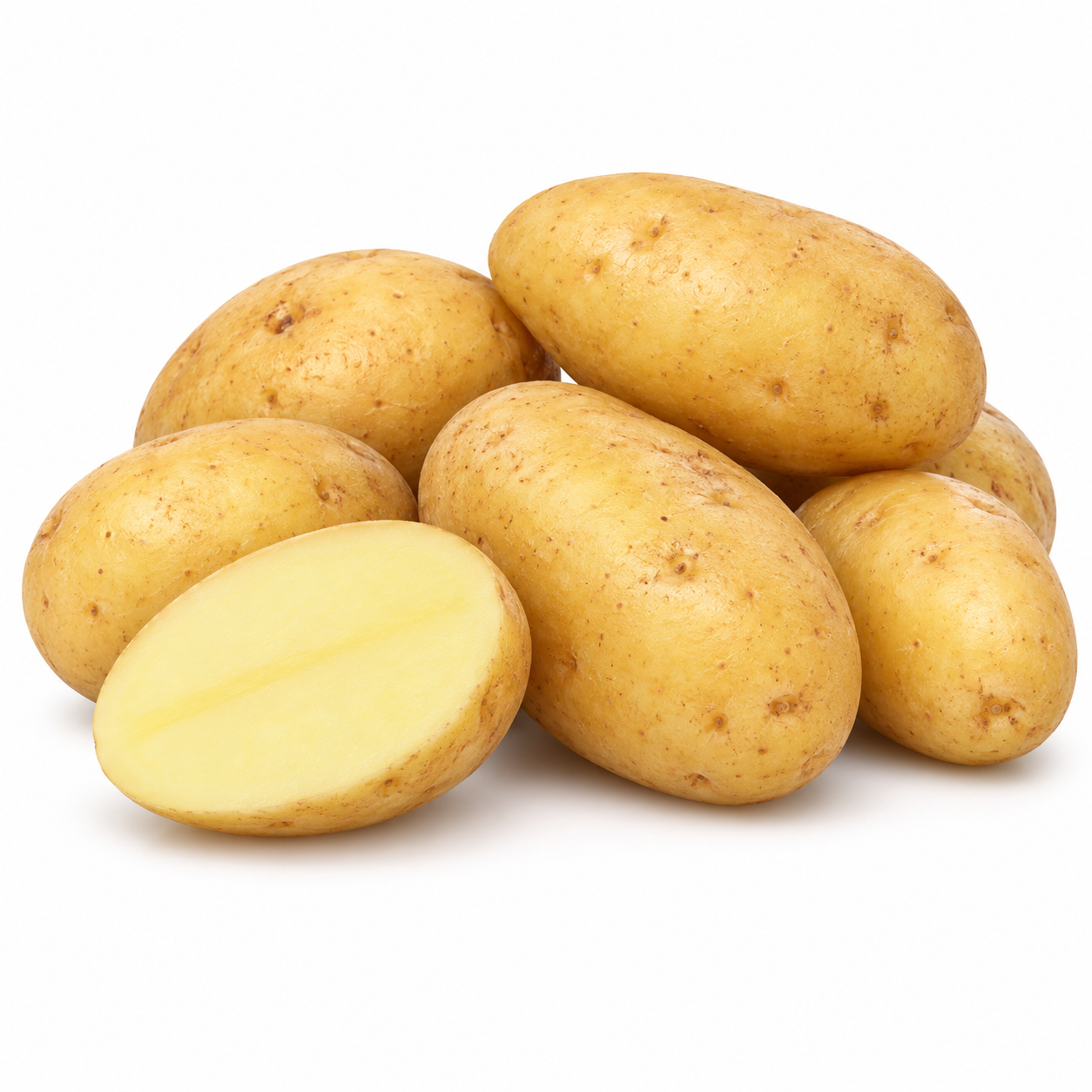
A medium-late maincrop with excellent late blight tolerance, large yellow-skinned tubers and a dry, fluffy finish. Alanis is especially well suited to home-grown chips and French fries, with useful drought, heat and storage strengths.
Description
Alanis brings together the qualities that make a maincrop worth growing: excellent tolerance of late blight, large long-oval tubers and a dry, fluffy texture that comes into its own in the kitchen.
The breeder highlights Alanis for French fries, and its generous, elongated tubers are well suited to making substantial home-grown chips. The pale yellow flesh cooks up fluffy; it is also a good choice for baking and roasting when you want a dry, light centre.
There is plenty to like in the garden too. Alanis is a medium-late maincrop with excellent late blight tolerance, good tolerance of dry and hot spells, and strong dormancy that supports long-term storage. The breeder also reports very high yield potential. These are useful strengths, though actual results depend on soil, weather and how the crop is grown.
Why grow Alanis?
- Maturity: Maincrop (medium-late)
- Cooking type: Floury — dry and fluffy when cooked
- Best for: Chips, French fries, baking and roasting
- Skin: Smooth, light yellow
- Flesh: Pale yellow
- Tuber shape: Oval to long oval, with shallow eyes
- Garden strengths: Excellent late blight tolerance and good tolerance of dry and hot spells
- Storage: Strong dormancy and good long-term storage potential
Growing note: Alanis is a medium-late maincrop, so allow it a longer season than an early potato. Its late blight tolerance is a real advantage, but it is not immunity; check crops during prolonged wet weather and follow good potato hygiene.
Additional information
| Weight | N/A |
|---|---|
| Options | 10 Tubers, 20 Tubers, 2 kg Pack, 5 kg Pack, 10 kg Pack, 25 kg Pack |
| Culinary | |
| Maturity | |
| Cooking Type | |
| Skin colour | Light yellow |
| Flesh colour | Light yellow |
| Tuber shape | Oval to long oval |
| Texture | Dry, fluffy flesh; especially well suited to chips and French fries |
Planting & Growing
Chit seed potatoes in a cool, bright, frost-free place if you want to encourage an earlier start. Plant from March into April once soil conditions are suitable.
Plant approximately 10–15cm deep, allowing 30–35cm between tubers and around 75cm between rows. Earth up developing shoots to keep tubers covered and maintain an even water supply while tubers are forming.
Variety-specific advice: Peter Pan is a maincrop, so allow it a longer growing season than an early potato. Its very strong late blight resistance is a valuable advantage, though regular crop checks are still worthwhile in damp conditions.
Harvest: Begin checking from late summer, depending on planting date and conditions.
For detailed advice on chitting, feeding, watering, growing potatoes in bags and containers, harvesting and storage, see our Seed Potato Growing Guides.
Delivery & Seed Info
Dispatch & Delivery
New-season seed potato dispatch normally begins from December/January, with orders sent as varieties become available. Where possible, we will group items from the same order into one delivery.
Quality & Storage
Patch specialises in seed potatoes. Our seed potatoes are carefully stored to maintain quality and visually checked before packing and dispatch.
Need a Larger Quantity?
We stock more than 50 varieties and can supply larger quantities than those shown online. Contact Alex if you require a larger quantity or have a specific requirement.
Growing Advice
Need some help getting started? Visit our Seed Potato Growing Guides for advice on chitting, planting, growing in bags and containers, harvesting and storage.
Problems With Your Delivery?
Please check your order when it arrives and contact us promptly if anything has been damaged in transit.
Only logged in customers who have purchased this product may leave a review.
Related products
-
King Edward Seed Potatoes
From £6.99 Select options This product has multiple variants. The options may be chosen on the product page -
Golden Wonder Seed Potatoes
From £6.99 Select options This product has multiple variants. The options may be chosen on the product page -
British Queen Seed Potatoes
From £6.99 Select options This product has multiple variants. The options may be chosen on the product page -
Maris Peer Seed Potatoes
From £6.99 Select options This product has multiple variants. The options may be chosen on the product page
Reviews
There are no reviews yet.