
Autumn is one of the best times to get ahead in the vegetable garden.
While much of the garden is beginning to slow down, onions, garlic and selected shallots can be planted now, establish before winter and get a head start when growth picks up again in spring.
For UK and Irish gardeners, autumn planting can mean earlier harvests, strong established plants and, in the case of garlic, the valuable period of winter cold that many varieties need for good bulb development.
In this guide, we’ll look at what you can plant in autumn, which varieties to choose and how to get them established successfully.
SHOP ONIONS, GARLIC & SHALLOTS →
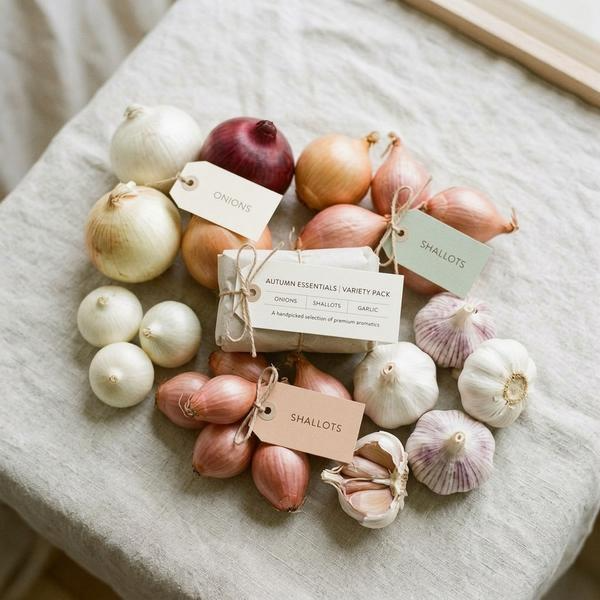
Why plant onions and garlic in autumn?
The main advantage is simple: time.
Instead of waiting until spring, autumn-planted crops establish their roots before the coldest part of winter. Growth slows as temperatures fall, then resumes when conditions improve.
Overwintering onion sets can consequently produce an earlier crop, often ready around June and July.
Garlic has an additional reason for going in early. Many garlic varieties benefit from a prolonged period of cold temperatures to encourage proper bulb and clove development, making autumn a particularly useful planting window.
The important exception is very heavy or waterlogged ground. Onions, garlic and shallots all prefer good drainage, so raised beds, containers or starting crops in modules can be better options where winter soil stays particularly wet.
Autumn Planting Onion Sets
Onion sets are simply immature onion bulbs. They’re straightforward to plant and are one of the easiest ways to grow a reliable onion crop.
For autumn planting, choose a variety suitable for overwintering rather than assuming that every spring onion set can be planted early.
At Patch, our autumn onion range includes several proven options.
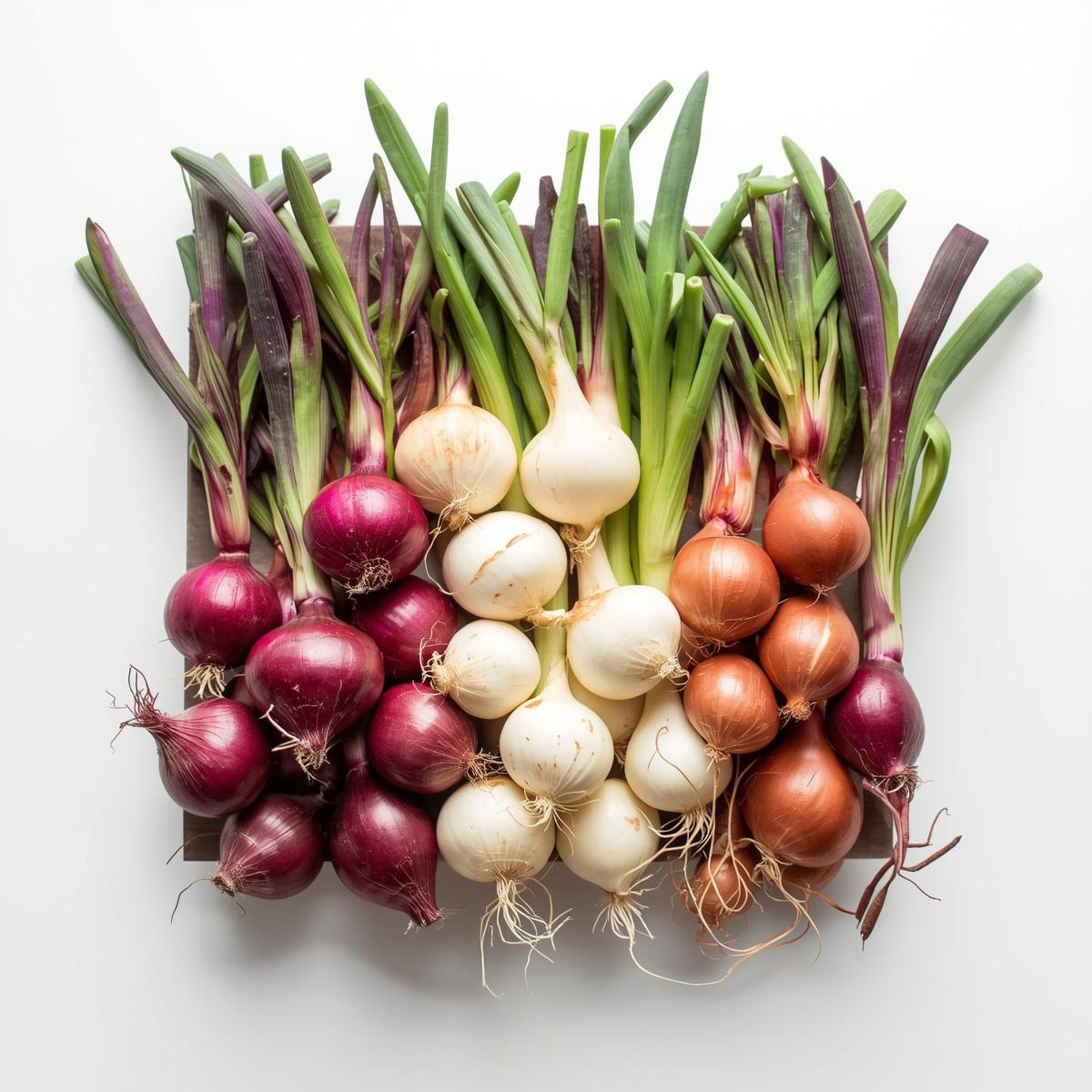
Senshyu Yellow
Senshyu Yellow is the classic Japanese overwintering onion.
It produces good yields of semi-flat, straw-yellow onions with a mild, versatile flavour. It’s a particularly good choice if your priority is an early crop of traditional yellow onions.
Our current Senshyu sets are supplied in a large 21/24mm grade, with approximately 65 sets in a 500g pack.
Best for: reliable overwintering and an early yellow onion crop.
Shakespeare
Another established overwintering choice, Shakespeare is a useful option for gardeners looking for a traditional brown-skinned onion for autumn planting.
Best for: a dependable traditional overwintering onion.
Red Baron
If you want to add colour to the crop, Red Baron is our red onion option.
It’s a well-known red variety with attractive deep-red skins and a stronger flavour. Red Baron can be grown from sets in both our autumn and spring ranges.
Best for: gardeners wanting a red onion alongside their traditional yellow varieties.
Snowball
For something different, Snowball gives you a white-skinned onion rather than the usual yellow or red.
Growing several colours together is also an easy way to make better use of a larger vegetable plot and gives you a more varied crop for the kitchen.
Best for: adding a white onion to your overwintering crop.
Can’t decide?
Our Overwintering Onion Selection Pack is the easiest option if you want to grow several varieties rather than choosing just one.
It’s particularly useful for allotments, larger vegetable beds or anyone wanting to compare varieties side-by-side.
How to Grow and Plant Autumn Onion Sets
Choose a sunny position with fertile, well-drained soil.
- Plant each set with the root end down and pointed end upwards.
- Space sets around 10–15cm apart.
- Leave roughly 20–30cm between rows.
- Leave the pointed tip just visible at the soil surface.
- Firm the soil gently around each set.
- Water after planting if conditions are dry.
Keep the bed weed-free and check newly planted sets regularly, as birds can sometimes pull them from loose soil.
Most importantly, avoid allowing the bed to become waterlogged through winter.
Autumn Planting Garlic
If you’re going to plant one crop this autumn, garlic should be high on the list.
Garlic is naturally well suited to autumn planting. Many varieties benefit from a period of winter cold, which helps the planted clove develop into a properly divided bulb.
There are two main groups you’ll come across: softneck and hardneck garlic.
Germidour
Germidour is a well-known French softneck variety producing large white bulbs with a mild but rich flavour.
It’s an excellent all-round culinary garlic and a reliable choice for UK and Irish gardens.
Our Germidour bulbs are supplied at 40–50mm grade and are available in 3, 6 or 10 bulb packs.
Best for: a dependable softneck, everyday cooking and good storage.
Messidrome
Another French softneck, Messidrome is a useful alternative if you want a traditional autumn-planted garlic with good culinary qualities.
Like Germidour, our bulbs are supplied at 40–50mm grade with multiple pack sizes available.
Best for: traditional French softneck garlic.
Hardneck or softneck garlic – what’s the difference?
This is one of the most common questions when choosing garlic.
Softneck garlic generally produces more cloves per bulb and tends to store for longer.
Hardneck garlic usually produces fewer but larger cloves around a central stem and often has a stronger flavour. Hardneck varieties can also produce flower stalks known as scapes, which can be removed and eaten.
Neither is universally better.
If long storage and an everyday kitchen garlic are your priorities, start with a softneck. If you’re interested in larger cloves, stronger flavours and trying something different, add a hardneck variety too.
For many gardeners, growing one of each is the best way to discover what performs well in their own soil and what they prefer in the kitchen.
And then there’s Elephant Garlic…
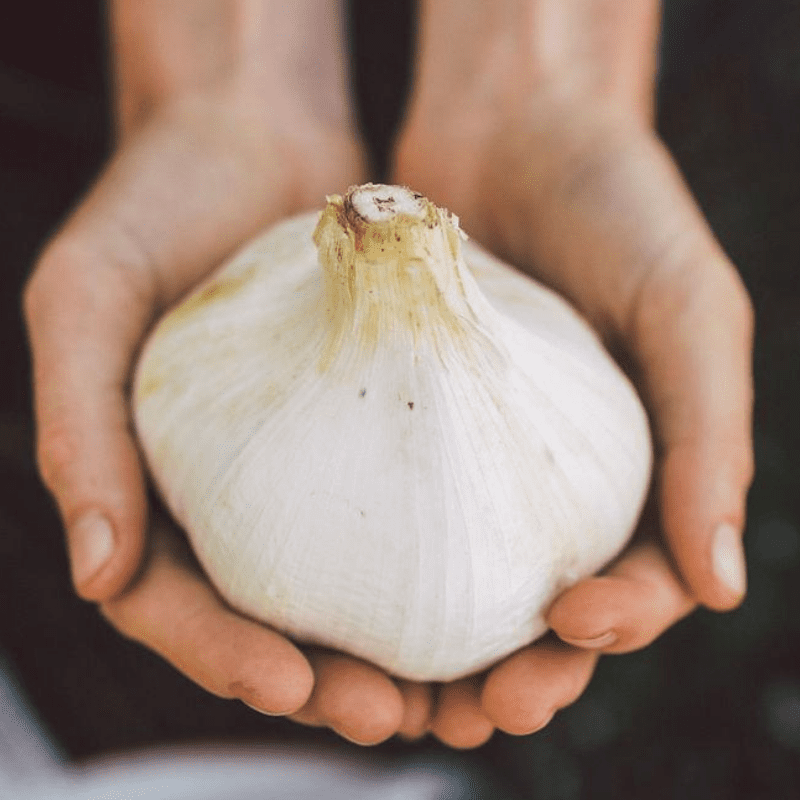
Elephant Garlic has become something of a cult favourite at Patch.
Despite the name, it’s actually more closely related to a leek than true garlic – but you grow and use its enormous cloves in much the same way.
The bulbs can become impressively large and the flavour is considerably milder than traditional garlic.
It benefits from a long growing season and is best planted in autumn, ideally around October, although spring planting is also possible.
It’s a great choice for children, new growers, anyone who likes growing something unusual – or simply anyone who wants to see just how large a home-grown allium can become.
Best for: huge cloves, mild flavour and something a little different.
How to Plant Garlic
Don’t plant the whole bulb.
Carefully separate it into individual cloves immediately before planting, keeping the papery skin intact.
- Plant each clove pointed end upwards.
- Space cloves approximately 15cm apart.
- Leave around 30cm between rows.
- Plant with the tip roughly 2.5cm below the soil surface.
- Choose full sun and fertile, free-draining ground.
Garlic dislikes sitting in cold, waterlogged soil. If your ground is heavy, a raised bed or container can be a better choice.
You can also start cloves in modules using a quality peat-free multipurpose compost, keep them somewhere cool and protected from excessive winter rain, then plant them into the garden when conditions improve.
Don’t Forget Shallots
Shallots deserve more attention than they sometimes get.
Rather than producing one large bulb, a planted shallot set develops into a cluster of new shallots.
They’re particularly useful in the kitchen, store well when properly cured and don’t require much growing space. Suitable varieties can be planted in autumn as well as spring.
Longor
Longor is an RHS Award of Garden Merit French banana-type shallot.
It produces distinctive elongated bulbs with purple-brown skins and pink flesh, with a fine flavour and good storage qualities.
Our Longor sets are supplied at 15/35mm grade.
Best for: French-style elongated shallots, fine flavour and good storage.
Golden Gourmet
Golden Gourmet produces the more familiar golden-skinned shallot and is a good choice if you want a traditional-looking crop.
Our current sets are a particularly generous 22/47mm grade and can be planted in both autumn and spring.
Best for: traditional golden shallots.
Red Biztro
For a red alternative, Red Biztro gives you attractive red-skinned shallots.
Like Golden Gourmet, our current Red Biztro stock is supplied at 22/47mm grade and is available for both autumn and spring planting.
Best for: red shallots and adding variety to the crop.
How to Plant Shallot Sets
Plant shallots in a sunny position with fertile, well-drained soil.
- Space sets roughly 15–20cm apart.
- Leave around 25–30cm between rows.
- Plant with the tip just visible above the soil.
- Keep the bed weed-free while plants establish.
Each set will eventually divide to form a cluster.
The biggest consideration with autumn planting is drainage. Avoid leaving shallots in heavy ground that becomes waterlogged over winter. If that’s your garden, use a raised bed or large container.
Which Variety Should I Choose?
If you want the simplest starting point:
- For an early yellow onion: Senshyu Yellow
- For a traditional overwintering onion: Shakespeare
- For a red onion: Red Baron
- For a white onion: Snowball
- For a reliable softneck garlic: Germidour
- For something unusual: Elephant Garlic
- For a French banana shallot: Longor
- For a golden shallot: Golden Gourmet
- For a red shallot: Red Biztro
Or Grow a Bit of Everything
If you’d rather not choose individual varieties, our Autumn Onion, Shallot & Garlic Selection Pack combines all three crop types in one convenient pack.
It’s a straightforward way to get an autumn allium bed started and gives you several different crops to look forward to next year.
SHOP THE AUTUMN SELECTION PACK →
A Few Final Autumn Planting Tips
The biggest enemy of overwintering onions, garlic and shallots isn’t usually cold – it’s poor drainage.
Choose the sunniest, best-drained part of the garden you have available and avoid planting into saturated ground.
Keep beds weed-free, but don’t overwork wet winter soil.
Once spring arrives, growth accelerates quickly. Keep an eye on moisture during prolonged dry periods and allow onions, garlic and shallots to mature naturally as summer approaches.
When foliage begins to yellow and fall, it’s usually a sign that harvest isn’t far away.
Get Your Autumn Planting Underway
Autumn planting is one of those jobs that doesn’t feel particularly dramatic when you do it.
A few sets and cloves disappear into the soil just as the garden is winding down.
But come spring, they’re already established and ready to grow – and by early summer you can be lifting some of the first onions, garlic and shallots of the new season.